

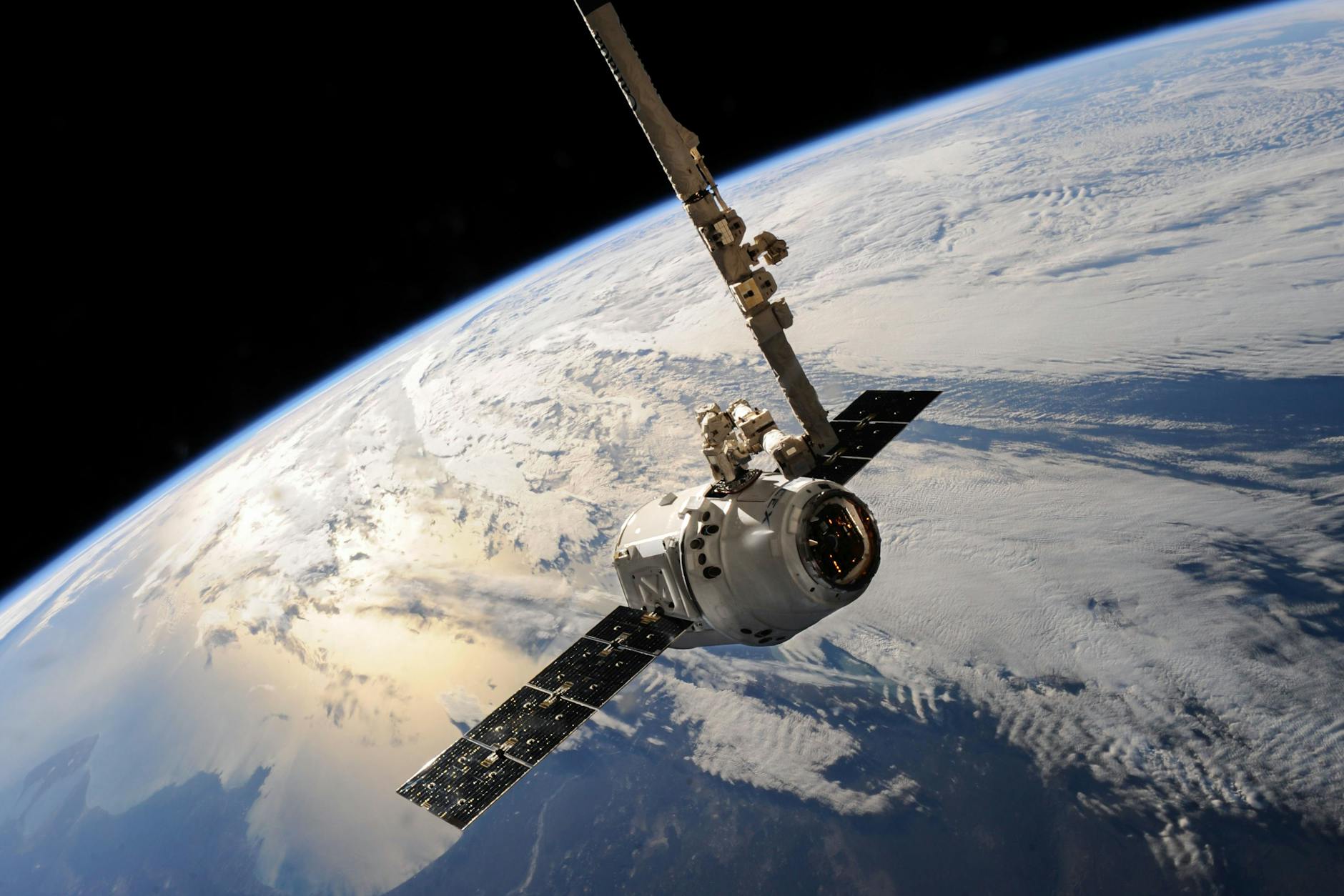
The biggest network upgrade of 2026 isn't 5G, and it isn't fiber. It's happening overhead. Sometime in the past year, without much fanfare, ordinary phones learned to text through satellites — and the dead zone, mobile life's oldest annoyance, started quietly dying.
Forget the old image of a satellite phone: the brick, the antenna, the eye-watering bill. Direct-to-cell works on whatever's in your pocket right now, assuming it's reasonably recent. Over 650 Starlink satellites currently act as cell towers in orbit, covering 22 countries. Around 60 phone models connect to them — late-model Samsungs, Motorolas, iPhones — and they do it automatically. No app. No aiming at the sky. Your phone loses the last ground tower and simply hands off to a satellite, same as it would to the next tower on the highway.
What works right now
Texting is the solved problem. T-Mobile's T-Satellite, running on Starlink, went commercial in July 2025 and costs about $10 a month as an add-on. Basic satellite data has been live since October 2025. Voice is the next hill — carriers are testing calls through 2026, with a wider rollout expected into 2027.
Apple has its own lane. Every US iPhone from the 14 onward ships with satellite messaging that only wakes up when cellular fails, supported by T-Mobile and Verizon. You could own one for years and never know it's there. That's the design.
And there's a challenger: AST SpaceMobile started 2026 with seven satellites up and plans for as many as 60 by year's end, building toward its own carrier-partnered service.
Now the fine print
Physics hasn't been repealed. Satellite links want open sky — canyons, thick forest and concrete get in the way — and a message might take noticeably longer to send than it would through a tower. Data is slow compared to terrestrial 5G, and each satellite can only serve so many people at once. Think safety net, not replacement network.
Honestly, that's the point. The whole value lives in the moments infrastructure abandons you: the trailhead, the empty stretch of interstate, the storm that knocks the towers out. Industry watchers have called direct-to-device one of the most significant mobile innovations of 2026, and the reason is simple — it redefines the worst case. A dead zone used to mean nobody could reach you. Now it mostly means your texts run a little slow.
The knock-on effects
Carriers have fought over coverage maps since flip phones. Satellites wreck that fight in the best way: once everyone can claim coverage everywhere, the competition has to move to capacity, speed and price. The biggest winners are rural customers, who've spent decades at the bottom of every coverage map.
There's an economics story here too. Towers in empty country have never paid for themselves — that's why the gaps existed. A satellite spreads its cost across entire continents, which is how this went from launch to 22 countries in about a year.
Worth watching
Three things: voice calls getting out of testing, data speeds creeping upward as more satellites go up, and AST's build-out giving carriers a second supplier to bargain with. None of it will tempt you to cancel your regular plan. But the era when losing signal meant disappearing is genuinely closing — no keynote, no countdown, just a quiet handoff a few hundred miles up.
Image: SpaceX, via Pexels