

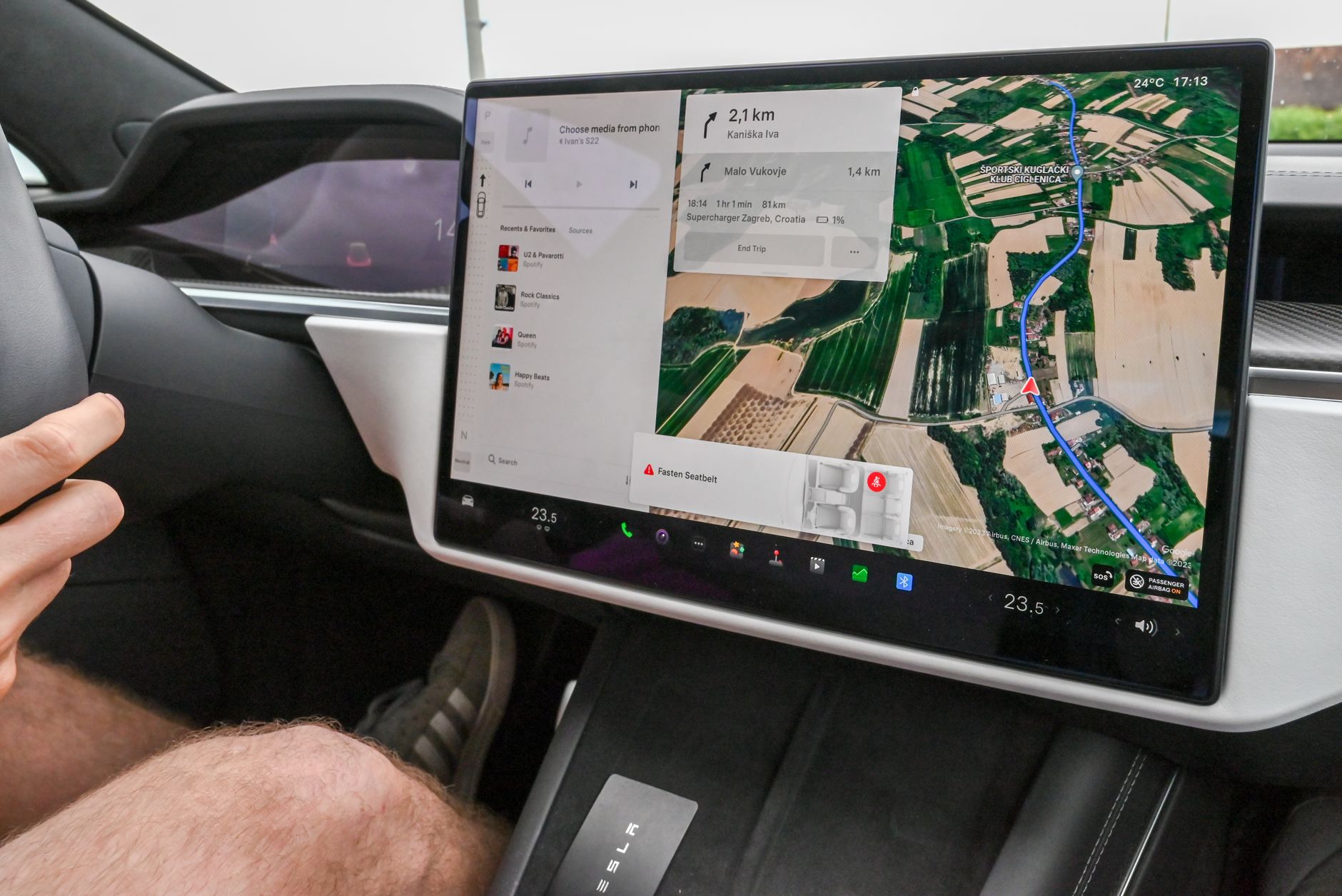
Google Maps is rolling out its biggest facelift in over a decade right now, and it's finally showing up where it counts — on the screen in your car. The 2026 update was announced back in March, but the staged rollout has reached Android, iOS, Android Auto, and CarPlay, and the map a lot of drivers see today doesn't look much like the one they've used for years.
So what changed?
Two big things. The first is Immersive Navigation, a rebuilt 3D driving view that draws the actual world around your route: textured buildings, overpasses, terrain, trees, crosswalks, off-ramps. The camera tilts down over a live 3D scene instead of hovering above a flat ribbon of road. Bridges turn see-through so you can still follow the route running underneath. Google's blending satellite and street-level imagery here, and the result reads less like a diagram and more like the street you're actually driving on.
The second is Ask Maps, a conversational assistant built on Gemini. You ask the map things in plain language, it answers in context. The search box is turning into a dialogue.
The logic behind the pretty pictures
Here's the part that's smarter than it first looks. The realism isn't for show — it's a safety bet. If the scene on the screen matches the scene out your windshield, same off-ramp curve, same corner building, you can confirm a turn in a half-second glance. No mental translation from abstract map to real road. Less time staring at the screen, more time watching traffic.
Which is exactly why the in-car rollout is the one to watch. On a dashboard, the map competes with the windshield directly. Making them match is the whole point.
Do you have it yet?
Maybe. It's a classic Google rollout, meaning: staged, patchy, and slightly mysterious. The US and India are first in line, on both Android and iOS, and running the newest app version doesn't guarantee anything. Drivers with compatible Android Auto setups have started reporting the immersive view just appearing one morning, so the in-car phase seems to be picking up speed.
Everyone else is still on the classic map, and Google hasn't published a timetable for the rest of the world.
Why this matters
Navigation apps have looked the same for fifteen years — flat road, blue arrow, the odd 3D landmark. This is the market leader retiring that whole visual language, and bolting an AI assistant onto the map while it's at it.
If the rollout holds up, the flat-map era won't end with a keynote. It'll end quietly, one dashboard at a time. Worth glancing at your car screen this week — yours might already be different.
Image: Vladimir Srajber, via Pexels


