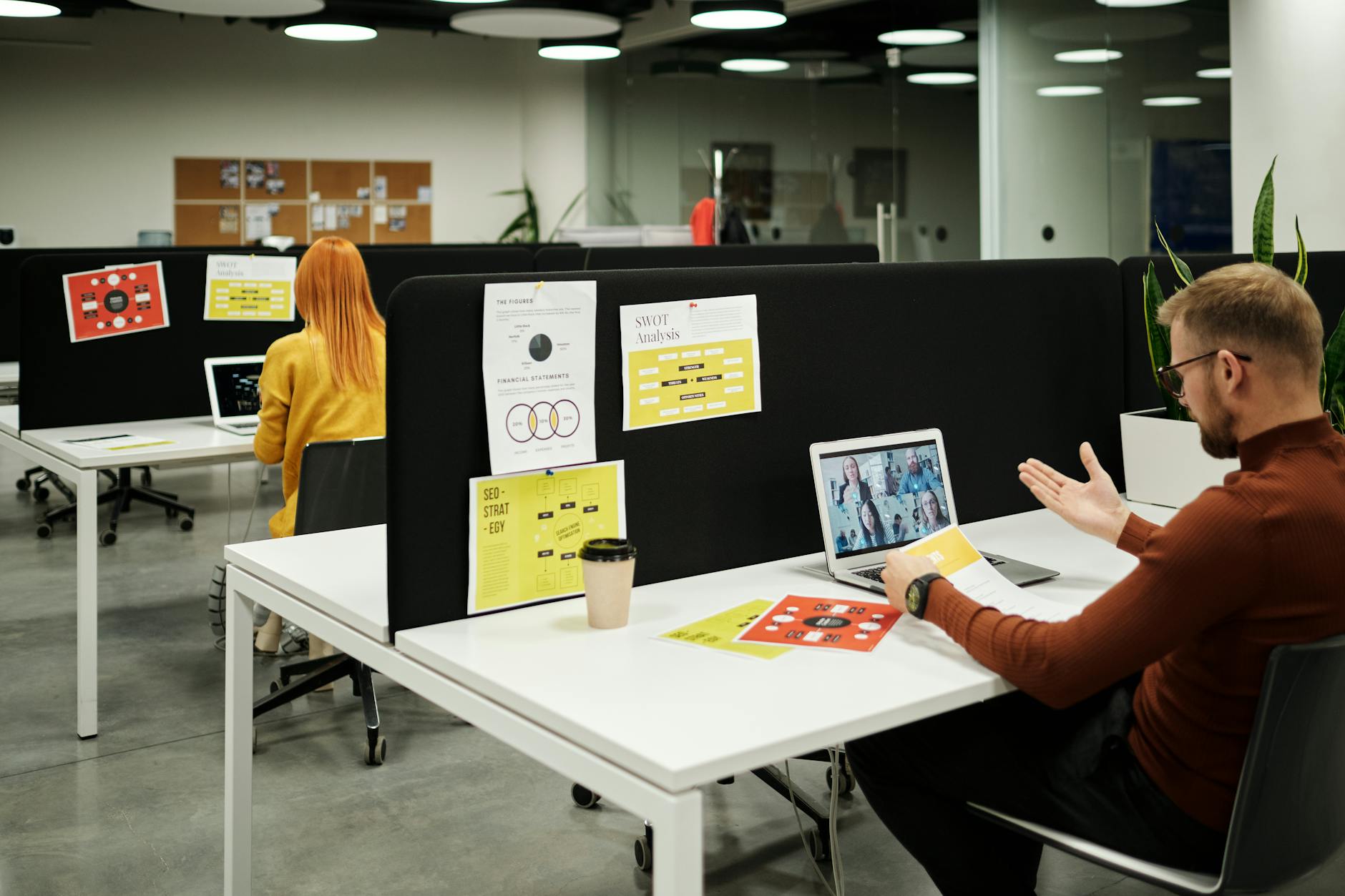


Executives Now Spend 23 Hours a Week in Meetings
The best finding in this year's meeting research is that "company meeting load" isn't a real thing. There are three different jobs running on one calendar, and advice built for one of them actively misleads the other two.
Individual contributors average around four hours a week in meetings. Managers, about nine. Executives are at nearly 23 — more than half a working week, gone.
Why that spread matters
An executive with 23 hours of meetings has a scheduling problem. An IC with four hours doesn't, and telling them to decline more invitations is advice aimed at entirely the wrong person.
It also explains why meeting-reduction pushes keep failing. They get designed by people at the top of the gradient, who genuinely experience the calendar as the main obstacle, then applied to people at the bottom, whose problem isn't volume at all. It's fragmentation.
The number actually worth acting on
The average employee sits in about 25 meetings a month. Roughly 70% of them recur.
That's the figure to work with. Recurring meetings get created once, for a reason that made sense that week, and then nobody looks at them again. They outlive the project, the reorg, and half the original attendees, because cancelling something takes a decision and leaving it alone doesn't.
You can see where that ends up. This year's reporting describes a 192% increase in weekly meetings, and a sixfold rise in meeting volume across two years.
What happens when companies actually cut
The evidence here is unusually clean. Organisations that cut meetings by 40% saw productivity rise 71%, with satisfaction climbing too.
The gain is bigger than the hours freed, which is the genuinely useful bit. Cutting four hours of meetings doesn't give you four hours back. It gives you four hours plus all the broken time around them that was previously useless. Forty-five minutes between two calls was never forty-five minutes of work.
The focus baseline
Only 39% of tracked work time counts as deep focus. The interruption environment explains that: the average employee gets interrupted by a meeting, message or notification about every two minutes during core hours.
There's a threshold worth remembering. Knowledge workers who get three and a half hours or more of daily focus time consistently report being more productive and more satisfied than people who don't. That's a realistic target inside a normal day — but only if meetings sit together instead of scattered through it.
The gap nobody predicted
58% of employees block time on their calendar to protect focus. Split by work mode, it gets strange: 64% of full-time office workers do it, 28% of hybrid workers, and just 8% of fully remote workers.
So the people with the most control over their environment are the least likely to formally defend it. Maybe remote workers assume their time is already protected. Maybe they're wary of looking unavailable when nobody can see them working. Either way, the group with the most to gain from blocking is the group doing it least.
Where to start
Go after the recurring meetings first. They're 70% of the load and the least scrutinised part of anyone's week. Consolidate instead of just cancelling, because a solid block beats the same number of minutes sprinkled across a day. And if you work remotely, treat that 8% as a habit gap, not proof that you don't need it.
Image: Diva Plavalaguna, via Pexels