

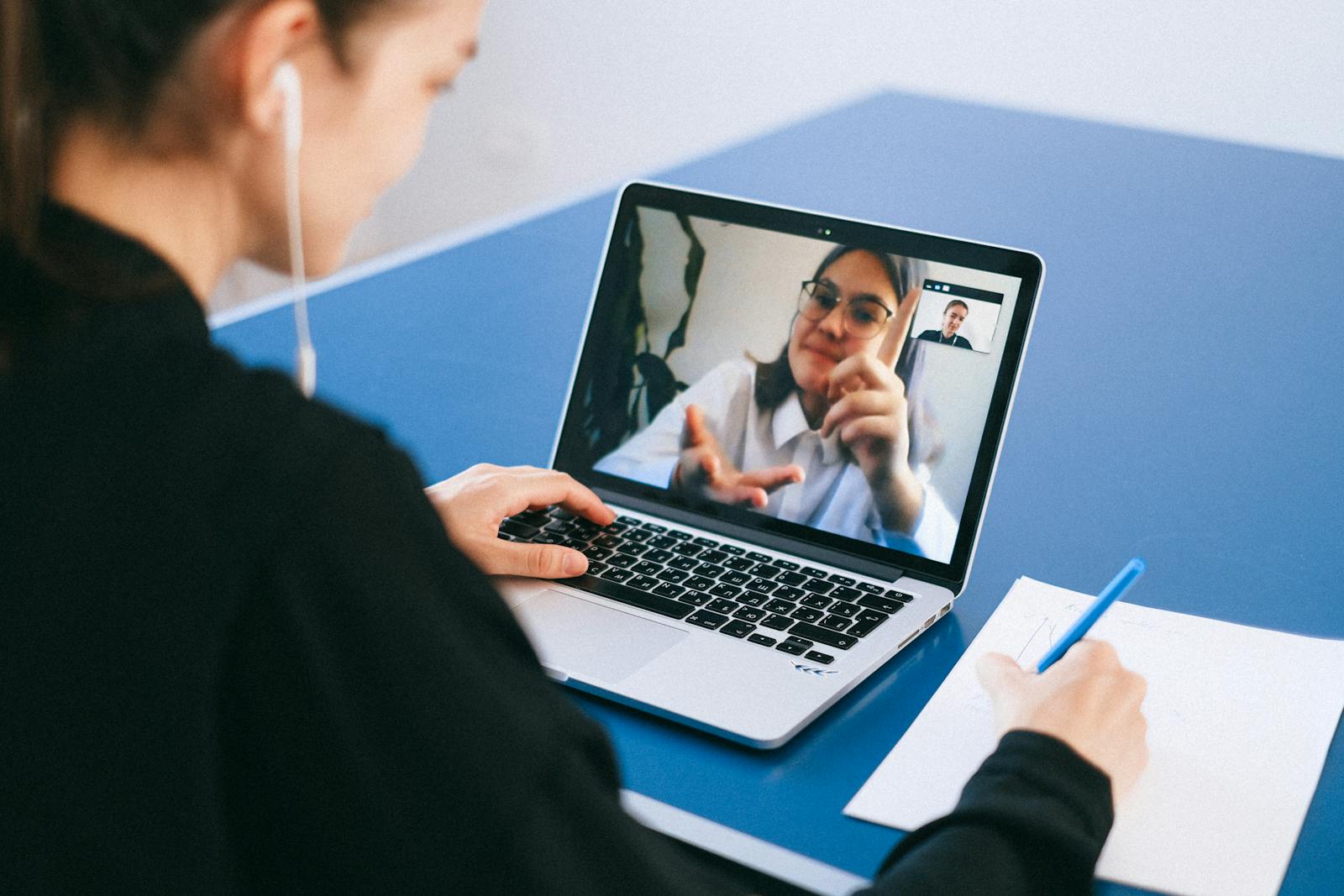
Somewhere in your last few video calls, there was probably an extra attendee — a bot named something like "Notetaker," quietly turning everything said into text. AI notetakers went from novelty to fixture fast. Summaries now land seconds after an hour-long call ends. The norms around them haven't kept up.
What they actually do
The pitch is real. These tools use speech recognition and large language models to record, transcribe and summarize meetings — what got decided, who owns what, where it goes next — so the humans can actually listen instead of scribbling. The best ones make it nearly frictionless.
And the market has specialized quickly. Individual productivity? Fathom. Sales intelligence? Fireflies and Avoma. Shareable highlight clips? Grain. Bot-free capture for sensitive conversations? Granola. Or skip third parties entirely with Zoom's AI Companion. Fathom holds the category's top G2 rating — 5.0 across 6,000-plus reviews — plus an unusually generous free tier and roughly 30-second turnaround after calls. Otter's edge is live transcription: OtterPilot streams a running transcript that several people can annotate while the meeting's still happening.
The part nobody discusses in the meeting
Now the uncomfortable half. Everything said in a recorded meeting becomes data. Confidential personnel details. Corporate strategy. Trade secrets. That joke that reads very differently in a deposition. And the biggest question privacy experts raise is still unanswered: where does the data live, and for how long?
Vendors may keep recordings, transcripts or metadata indefinitely. Some use meeting content to train models — so sensitive business information could shape how a model behaves, or in edge cases get memorized. Delete the content and metadata about your meetings can still sit with the vendor.
Voiceprints are the sharpest worry. Privacy advocates warn that vendors may be building biometric voice profiles — fingerprint-equivalents that can unlock restricted systems, bank accounts included. Illinois already covers voiceprints under its Biometric Information Privacy Act: written notice, informed consent, documented retention and destruction. Most states? Nothing equivalent.
The new etiquette
A few habits are hardening into standard practice. Check for the bot when you join — it usually shows up as an attendee, though not every platform makes it obvious. Zoom and Google Meet disclose recording; plenty of software doesn't. Announce your own notetaker instead of letting people find it. And accept that some colleagues just don't want to be recorded — offering to kill it for sensitive conversations isn't courtesy, it's the baseline.
Genuinely confidential territory — personnel, legal, deals — deserves a harder question: should this be captured at all? If yes, that's what bot-free tools are for.
The bottom line
AI notetakers fix a real problem and they're not going anywhere. But every recap is also a record. Pick tools with clear retention policies, get consent where law or decency demands it, and keep asking the question that matters most about any meeting tool. Not what it captures — who sees it later.
Image: via Pexels