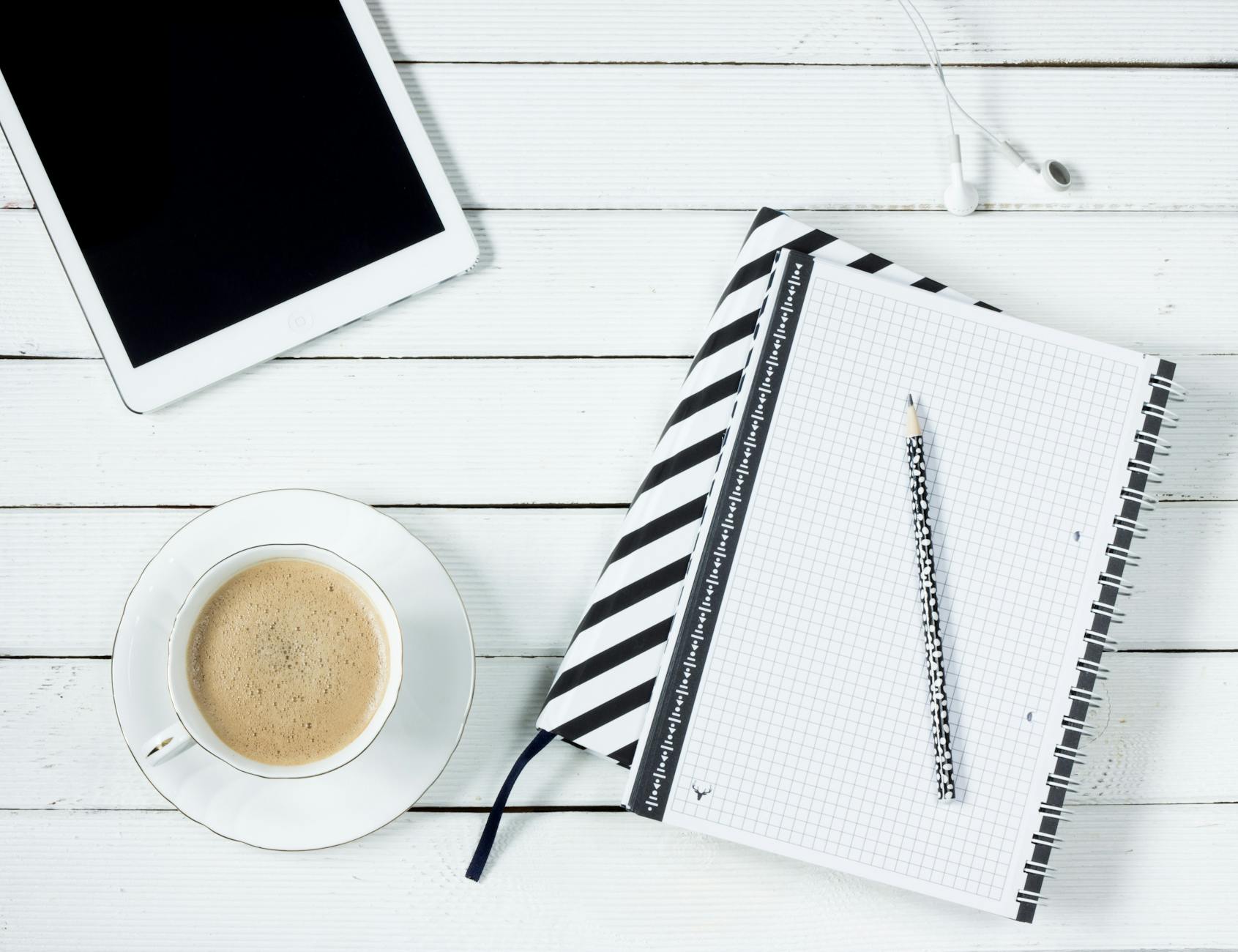

Paper planners are selling again, and not to who you'd guess. Gen Z and millennial shoppers are driving the category — New York Magazine, Vogue and Business Insider have all pointed at analog planners and personalised stationery as things younger buyers genuinely still want.
Easy to file this under nostalgia. Another aesthetic revival, like film cameras or records. But that misreads what buyers say they're after, which isn't the object at all. It's the lack of notifications.
The device is the problem
Digital planning has one structural flaw: the tool sits on the same hardware as everything fighting for your attention. You open an app to check today's priorities and land on a screen that also holds your messages, your feeds, and whatever showed up in the last hour.
We know roughly what that detour costs. The figure that gets quoted is 23 minutes, on average, to properly refocus after an app alert pulls you away. Apply that to a planning tool and you get something absurd: the system meant to protect your attention is installed on the main thing shredding it.
A paper planner can't do that. It has no way to interrupt you. Everywhere else that's a limitation. Here it's the whole point.
Handwriting isn't just slower typing
The second argument is about your brain rather than your environment. Writing by hand pulls in motor skills and spatial memory in a way typing doesn't, and that's why people tend to remember what they wrote on paper.
There's a version of this you can test yourself. Most people can recall roughly where on a page they wrote something — top left, near the fold, next to Thursday — in a way they never can with a scrolling list. The page becomes a place, and things kept in places are easier to find again.
Then there's friction. Handwriting is slow, so it forces you to choose. A digital list will swallow unlimited items for free; a paper page simply runs out. That limit does the prioritising most of us otherwise dodge.
What paper is bad at
Analog evangelism tends to skip this bit, so let's be straight. Paper doesn't search. It doesn't sync. It can't tell you about a meeting in ten minutes, share a calendar with a colleague, or survive getting left in a taxi.
Even sources with money riding on digital planning concede the focus argument while defending those strengths — and they're right to. A system that loses appointments isn't better just because it's peaceful.
Where people actually end up
The consensus isn't full analog. It's a split, based on what each thing is genuinely good for.
Paper gets weekly priorities, thinking, personal tasks, anything that needs sustained attention. The phone gets time-sensitive reminders, shared calendars, anything someone else has to see. Nothing goes in both, because duplication is exactly what kills hybrid systems inside two weeks.
Put that way, the notebook is a small intervention rather than a lifestyle. You get a daily stretch of screen-free thinking without abandoning your calendar, your team or your commitments — which is probably why this category keeps growing while the more demanding digital detoxes keep collapsing.
The paper planner isn't winning because it's charming. It's winning because it's the only planning tool that can't also show you something else.
Image: PNW Production, via Pexels