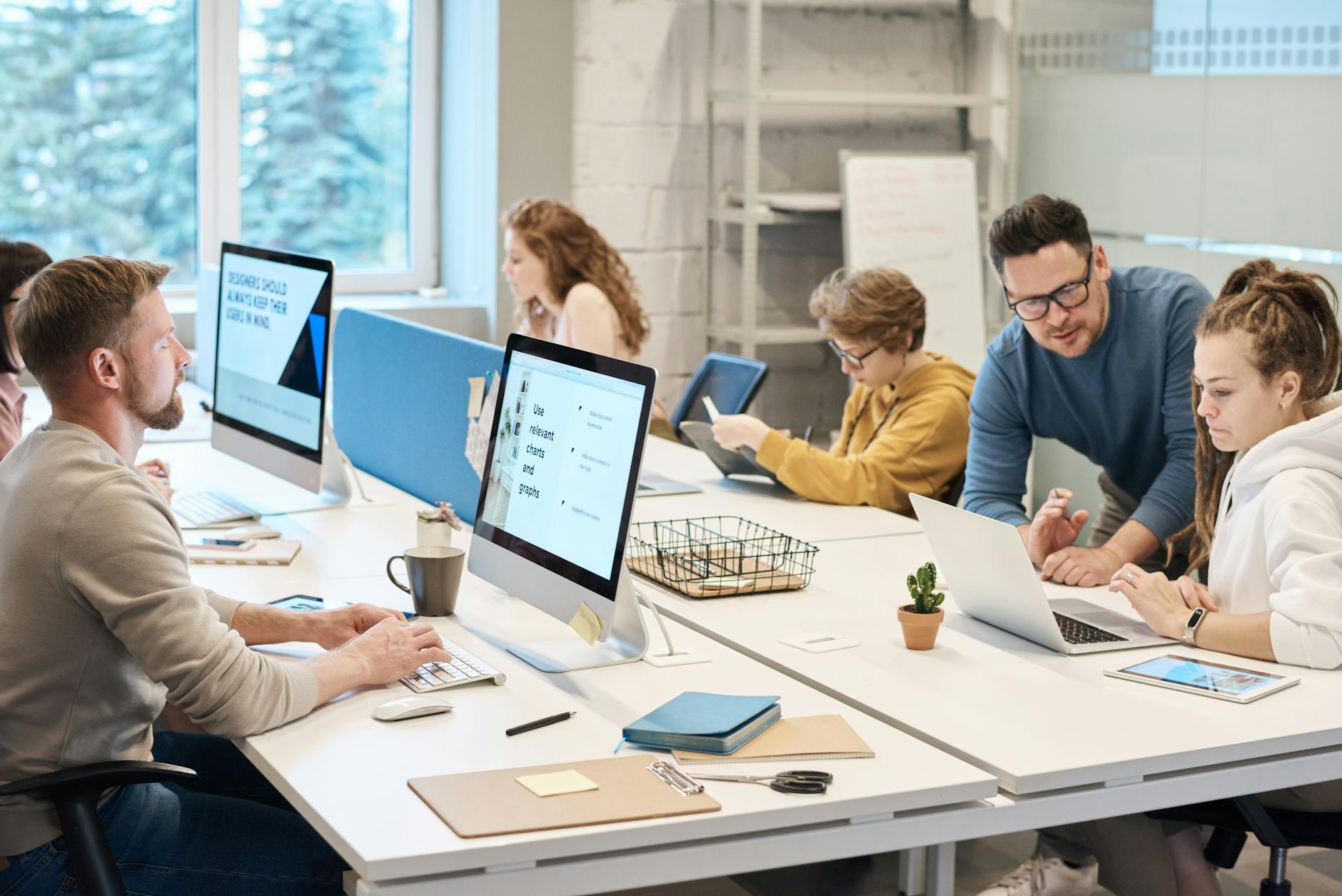
There's a skill quietly thriving in offices right now, and it produces absolutely nothing. "Task masking" — the art of looking busy when you're not — is now common enough that Gen Z workers swap techniques on TikTok, and some film themselves doing it at their actual desks. Tempting to file under generational mischief. The numbers say it's structural.
Everybody's in the show
Scale first: 65% of workers admit they sometimes do productivity theater — looking busy without doing anything meaningful. And for plenty of people it's not occasional. 43% of office workers put ten or more hours a week into it, with pointless meetings serving as the main stage.
Ten hours is a quarter of the workweek. Whatever task masking is, it isn't fringe behavior — it's a real line item in how office time actually gets spent.
Where it came from
The visible surge tracks the return-to-office wave. People pulled back from remote jobs — where output was the only thing anyone could see — landed in spaces where presence is what gets seen. And if you're graded on visibility, the rational move is to produce visibility: walk fast, keep the calendar packed, look permanently mid-task.
Underneath it is a trust problem, and the research is specific: when employees feel watched but not trusted, they respond with theater instead of work. Surveillance doesn't buy productivity. It buys the appearance of productivity, performed by people who've correctly figured out what's actually being measured.
That's the uncomfortable version for managers. Task masking isn't really an employee character flaw — it's an audit finding. A workforce performing busyness is telling you, with precision, what your incentives reward.
The actors pay too
None of this is free for the people doing it. Hours spent maintaining the look of work are hours the actual work can't use, so the real tasks pile into whatever time is left. And the performance itself is tiring — managing an image all day is labor. Just unpaid, unproductive labor.
Which makes the TikTok angle interesting. Filming your own task masking is half joke, half protest: a way of announcing the metrics are absurd, out loud, to an audience, without ever saying it to a manager.
What actually works
The companies getting somewhere are running the opposite play. Instead of measuring visible activity harder, they protect the conditions for real output. Meeting-free blocks are the flagship move — organizations that carve out protected time see measurable productivity gains, mostly because they've stopped taxing focus to feed the appearance economy.
The principle is old and keeps being relearned: measure outcomes, protect focus, and quit rewarding visibility as a stand-in for contribution. Proxies get gamed. It's what proxies are for.
Task masking is a mirror, in the end. Reward looking busy and you get a workforce that has professionalized looking busy. Change what gets rewarded and — going by the early evidence — you start buying back some of those ten lost hours a week.
Image: fauxels, via Pexels